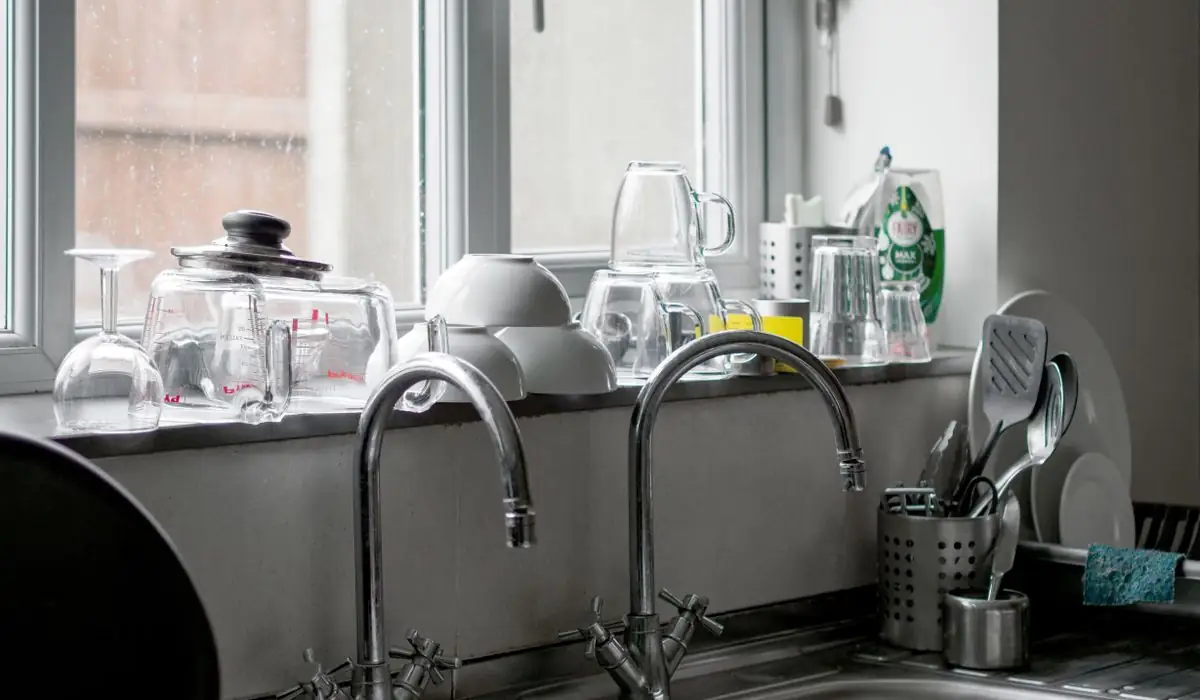
What kitchen sink drain clearing involves
The job starts under the cabinet. We pull the P-trap, check it for a solid plug, and look at the trap arm where it enters the wall. Most kitchen clogs sit further along, in the horizontal branch that runs to the stack. That section gets a hand-cranked or machine cable sized for 1-1/2 inch or 2 inch pipe, not the big sewer machine.
- Shut off the dishwasher and disposer at the switch or breaker.
- Remove the trap and inspect the fittings for cracks or worn washers.
- Run the cable through the branch to the stack.
- Run hot water through it and watch how it drains rate.
- Reassemble with new washers if the old ones are flattened.
If the cable comes back coated in white, waxy grease, we say so. That tells you the line will close again unless habits change or the pipe is jetted clean.
Why North York houses need it
Many 1950s and 1960s bungalows and side-splits here still have galvanized steel kitchen branches. Steel rusts on the inside, and the rough surface catches grease faster than plastic does. Houses that were renovated often have a newer ABS trap tied into an old steel line in the wall, so the visible part looks fine while the hidden part is half closed.
Island sinks added during kitchen renovations are another regular call. Some were vented with an air admittance valve or a loop vent that was never quite right, and a poorly vented drain gurgles and drains slowly even when it is clean.
How we write up the job
Your work order lists where the blockage was, how far in, what it was made of, and the pipe material we found. If the branch is steel and badly scaled, we note it and give you the option of replacing that run rather than clearing it every year. Nothing gets replaced without your say-so.
Plumber's tip: Do not pour chemical drain opener before we arrive. It sits in the trap, and we have to take that trap apart with our hands.
Signs you should call
- Water backs up into the second bowl when the first one drains.
- The dishwasher finishes with water still in the sink.
- The drain gurgles after the disposer runs.
- A plunger clears it for a day or two and then it is back.
If the basement floor drain or laundry tub also backs up, the trouble is probably further down, in the main. That is a different job, covered under main sewer line clearing.
Costs and what affects them
We do not list a flat price because the job varies. Access matters: a trap behind a built-in garbage bin or a sink on an island with no cleanout takes longer. Distance to the stack, pipe material and whether the line needs a second pass all change the time. You get the price on the work order before we start, and our leaflet on what not to pour down the kitchen drain helps keep you from needing us again.
Job at a glance
| Category | Drains |
|---|---|
| Tools | Hand auger, small drum machine, slip-joint pliers, new trap washers |
| Final test | Dishwasher pump-out plus both bowls draining together |
Tell-tale signs
- Both bowls fill when the dishwasher pumps out
- Sour smell rising from the disposal side
- Grey water backing into the second basin
Steps on the job
- Empty the cabinet, set a pail under the trap arm
- Unthread slip nuts and pull the trap and continuous waste
- Cable the wall arm toward the stack, scraping congealed fat
- Rebuild the trap with new washers and run the dishwasher drain cycle
Your questions on this one
Can a kitchen clog affect the rest of the house?
Usually not. A clog in the kitchen branch stays at the kitchen sink. If other fixtures are slow at the same time, the blockage is in the main line instead.
Is a garbage disposer the cause?
It can add to it. Disposers grind food fine, but starches and grease still settle in the branch line. Run plenty of cold water with it and keep fats out.
Will you use chemicals?
No. We clear the line mechanically with a cable, and recommend jetting only when grease buildup is heavy and the pipe can take it.